ARIA is a research platform for linking diverse simulators, observation devices, information systems, and analysis technologies related to disasters.
Disasters unfold through interactions among many factors, including natural phenomena such as rainfall and flooding, human evacuation behavior, communication environments, power supply, roads, and information services. However, technologies for dealing with these factors have largely been developed independently.
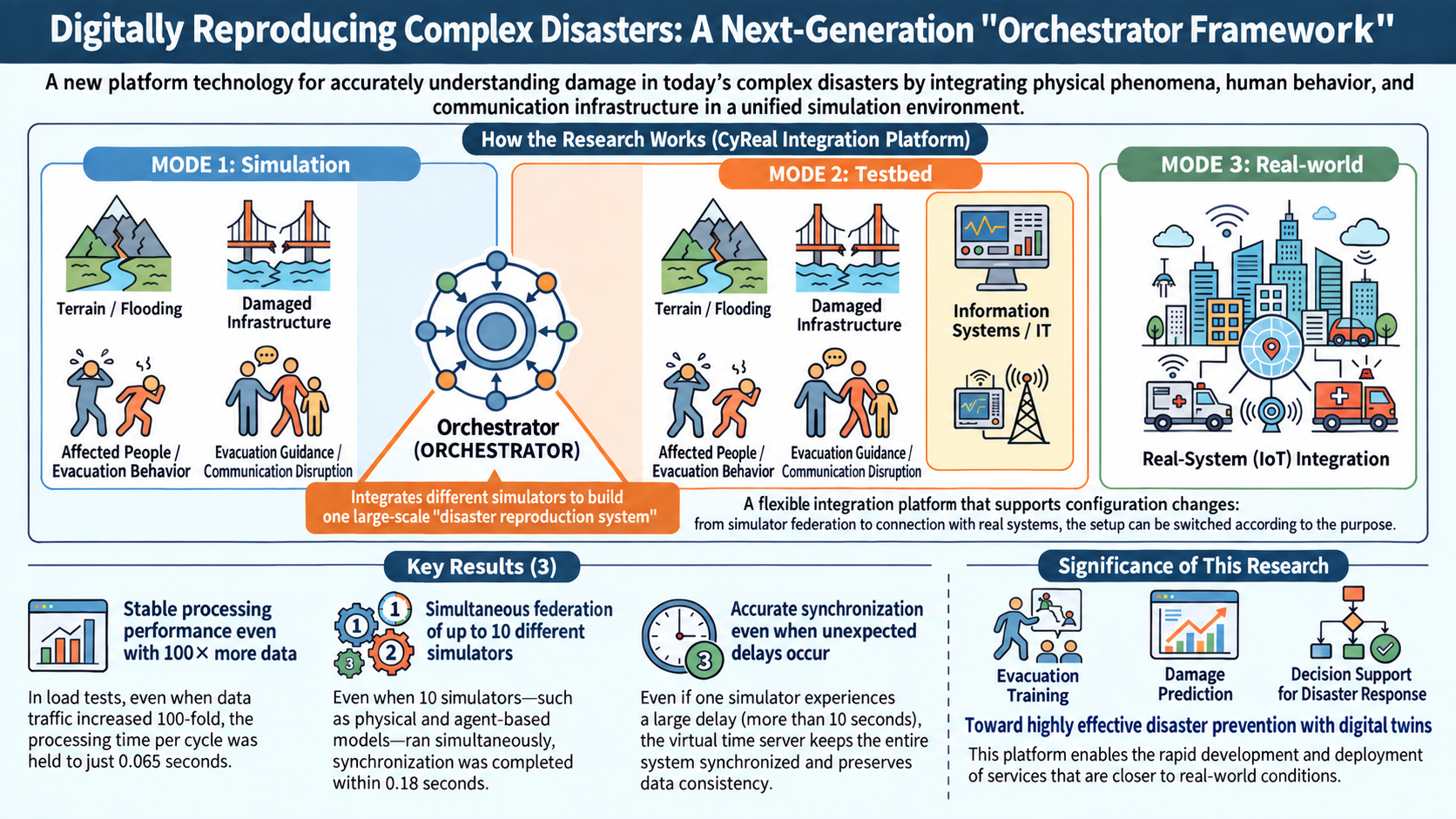
Rather than rebuilding them as a single large system, ARIA enables existing simulators and real systems to be flexibly combined and operated cooperatively while retaining their individual functions.
In this way, ARIA aims to reproduce and analyze disaster situations comprehensively, including not only disaster phenomena themselves but also resulting infrastructure failures, impacts on information services, and human behavior.
Reproduce multiple phenomena and systems in the same disaster scenario
ARIA can link different simulators and analysis technologies for flooding, evacuation behavior, communication environments, information systems, and other components, allowing disaster situations to be reproduced while reflecting their mutual effects.
Evaluate analysis technologies and simulators
New analysis methods and simulators can be incorporated into ARIA and evaluated for performance and validity while operating together with other component technologies. Because experiments can be repeated using past disaster data and different conditions, ARIA can serve as an evaluation platform for the development and improvement of disaster-prevention technologies.
Test disaster-response applications and information systems before deployment
By replacing part of an ARIA experiment with an actual application or system, researchers and developers can examine how far it continues to operate under conditions such as communication failures or flooding, and identify where and why it becomes unavailable.
Analyze how information availability affects human behavior
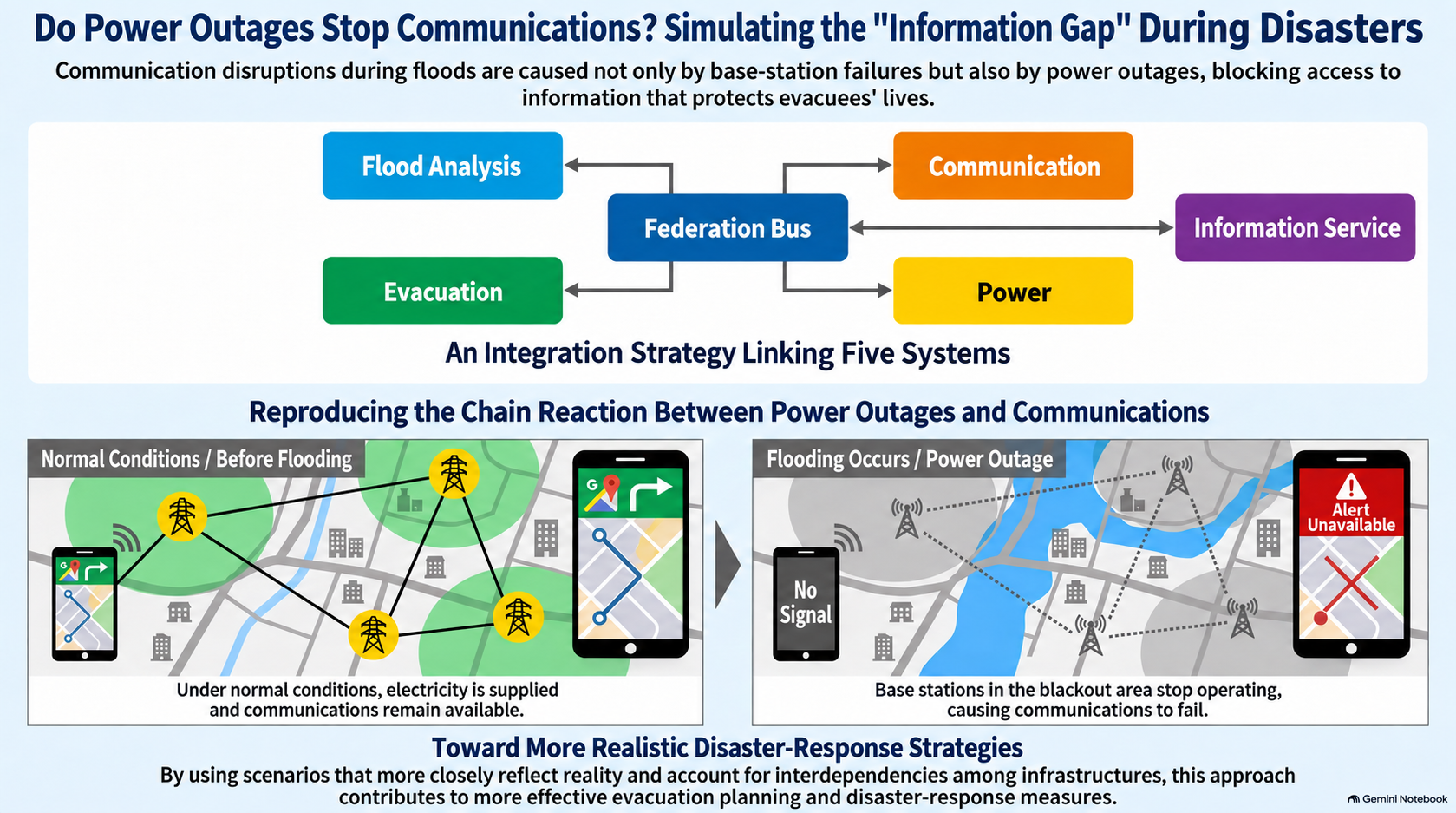
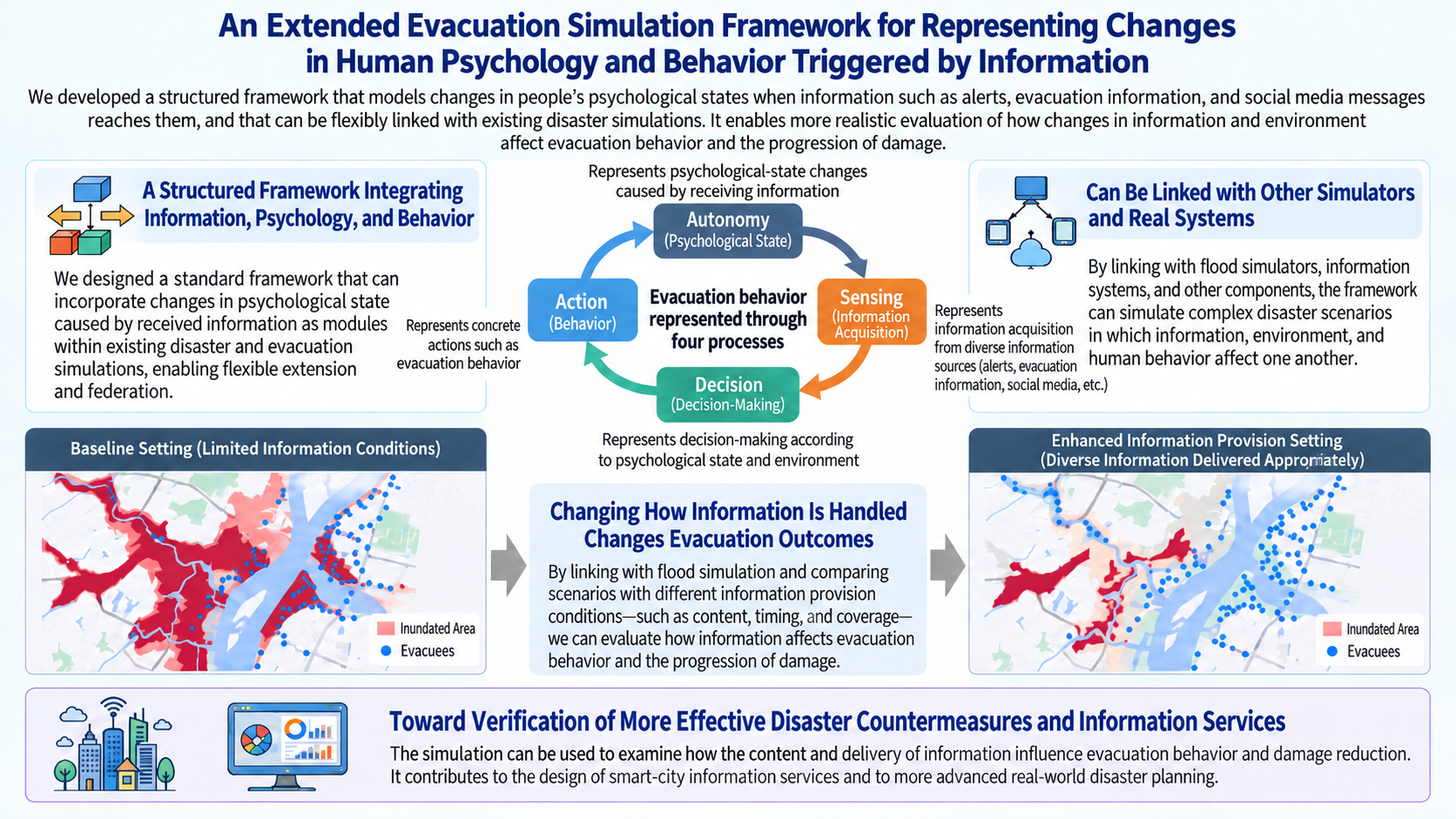
ARIA can trace how infrastructure failures propagate to information provision and evacuation behavior, allowing researchers to examine how service outages and delays ultimately affect decisions and actions.
1. Development of the Integration Platform
We develop the ARIA platform and methods for flexibly linking heterogeneous simulators, infrastructure models, services, applications, and real systems.
2. Analysis Using the Integrated Platform
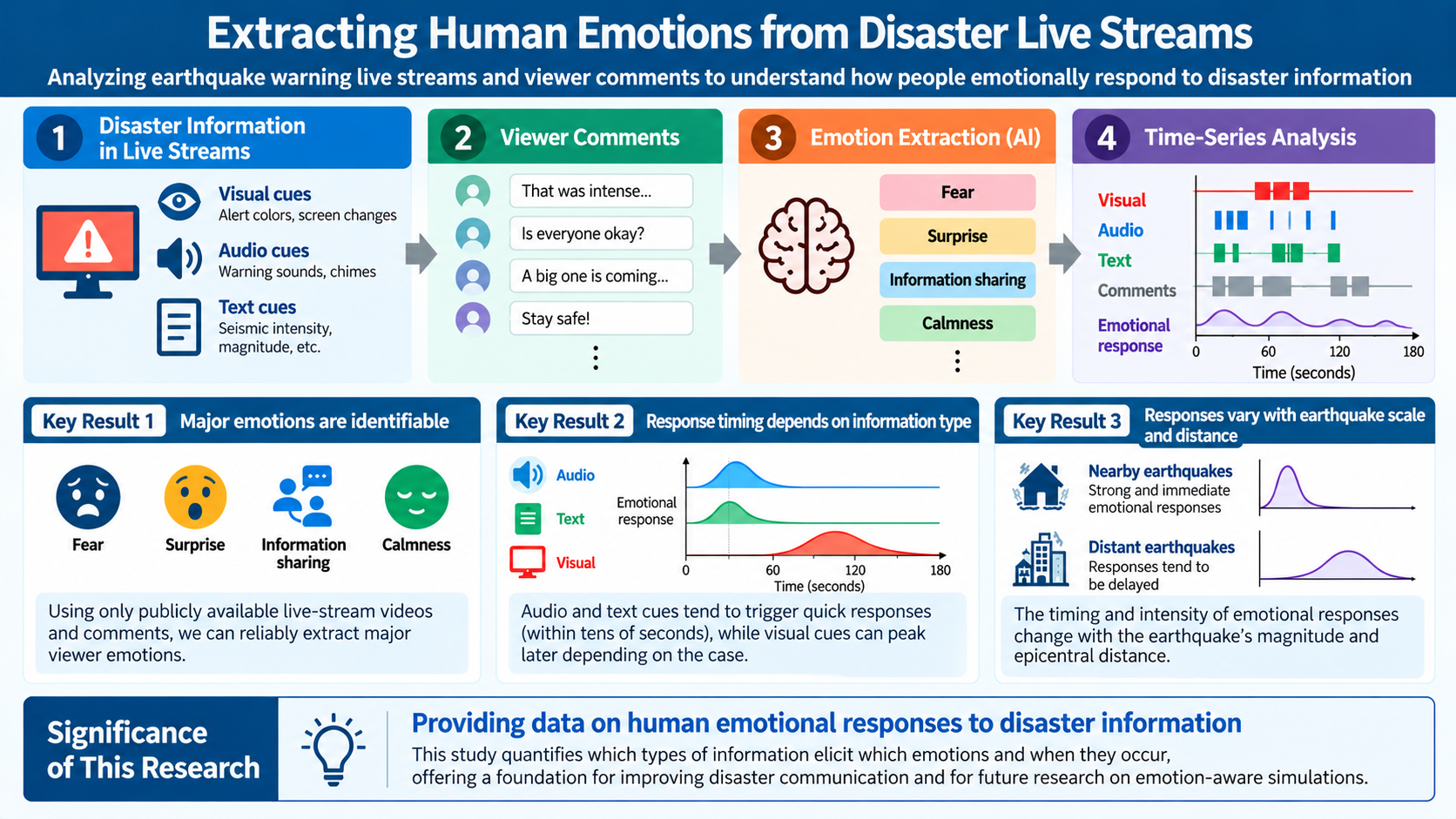
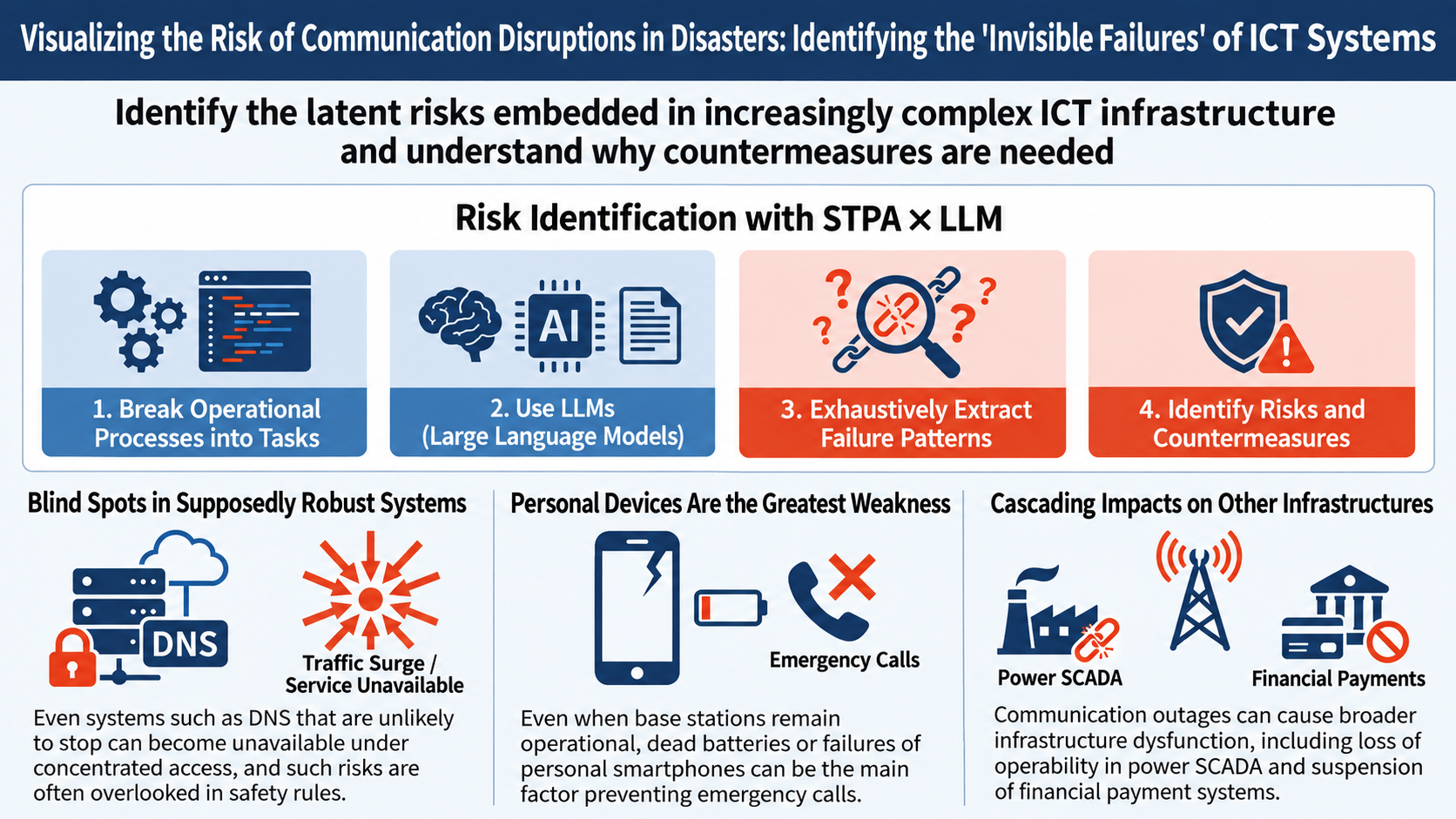
We use ARIA to investigate disaster impacts across infrastructure, information services, applications, and human behavior, including the propagation of failures among dependent systems.
3. Synthetic Disaster Data
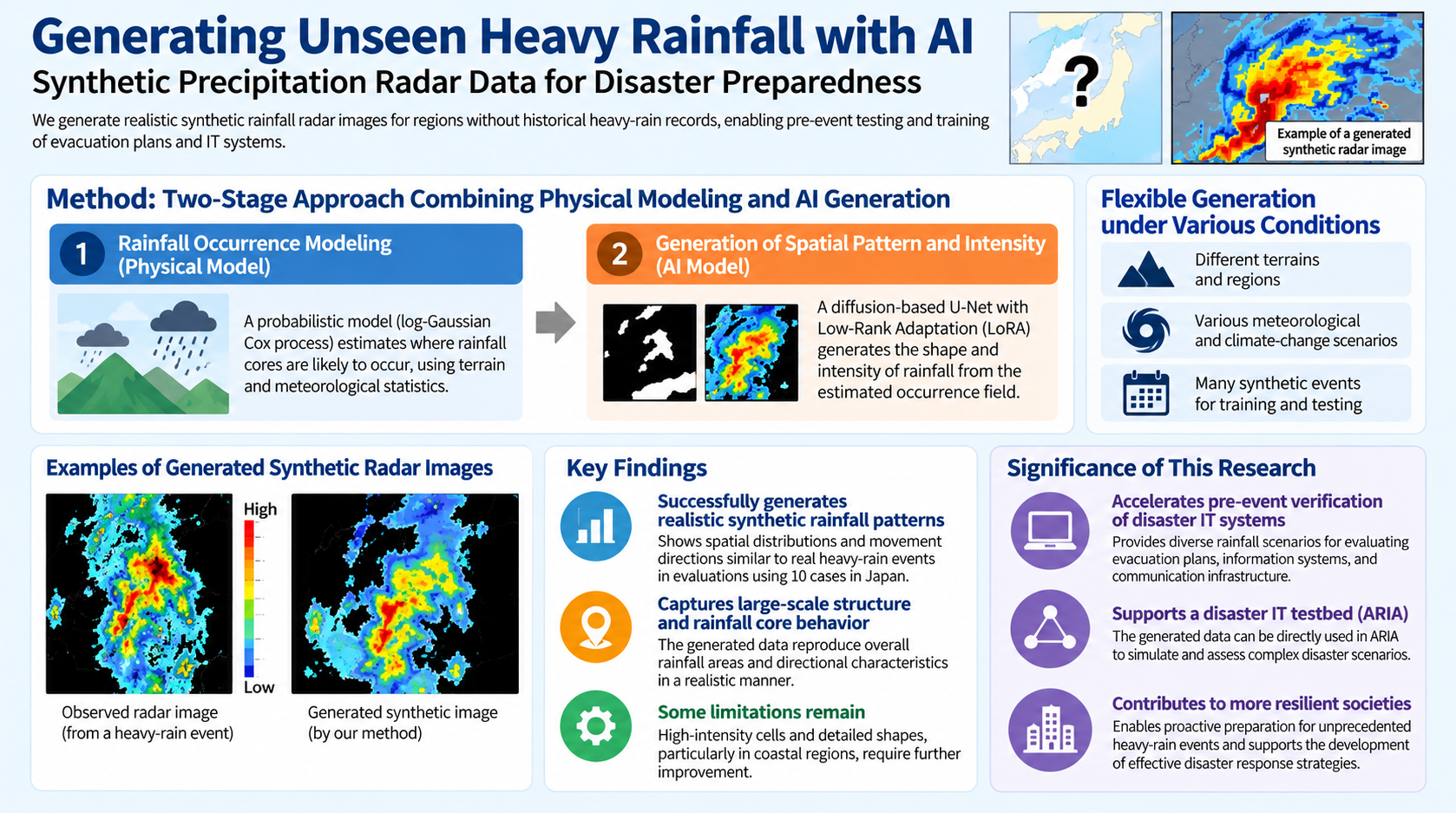
We develop methods for generating disaster scenarios and synthetic disaster data for use as experimental conditions, including rainfall and flood scenarios and extensions to other hazards.
 Kei Hiroi
Disaster Prevention Research Institute,
Kyoto University
 Akihito Kohiga
Doshisha University
 Sho Fukaya
Suwa University of Science
 Yoichi Shinoda
NTT DOCOMO BUSINESS, Inc.
 Takumi Kataoka
Altirius
Principal Investigator: Kei Hiroi, Kyoto University
Contact: hiroi[at]dimsis.dpri.kyoto-u.ac.jp